#15: Are Adult Students Your Untapped Opportunity? With Dr. Pamela Pike
🎧 Listen Now:
Spotify | Apple | YouTube Video | YouTube Audio | iHeart | Amazon | Goodpods | Pocket Casts
BLOG: Here's a number that might change the way you think about your studio.
In the US, around 77% of potential piano students are adults. Adults who are curious, emotionally connected to music, and looking for exactly what a good piano teacher can offer.
And most piano studios are almost entirely focused on children.
That gap is one of the most exciting opportunities in piano teaching right now. And Dr. Pamela Pike has spent her career helping piano teachers understand how to take it.
Who is Dr. Pamela Pike?
Dr. Pamela Pike is one of the world's leading researchers and educators in adult piano pedagogy. She is editor-in-chief of Piano Magazine, co-editor of the Journal of Piano Research, and a passionate advocate for the unique potential of adult students in the piano studio.
Paul sat down with Pamela at the Australasian Piano Pedagogy Conference in Adelaide, and the conversation was full of practical, immediately usable ideas for any teacher who works with adults - or who has been wondering whether adult group piano might be the next exciting chapter for their studio.
Why Adults Want to Learn Piano
When adults call a piano teacher for the first time, they often can't quite articulate why.
But as Pamela has found through years of research and teaching, the reasons that rise to the top are consistent.
Curiosity. A lifelong dream. The desire not just to listen to music, but to be part of creating it.
"More than just listening to music, they'd like to be part of creating music and playing music. Sometimes they don't realise that early on."
Adults arrive at your studio with sophisticated musical tastes, deeply held goals, and a level of motivation that children often don't have. They have chosen to be there. They are investing their own time and money. They want to learn. And some of them just simply want an activity or to make music.
That makes them extraordinary students - when we know how to teach them.
The Three Learning Orientations
One of the most useful frameworks Pamela shares is the idea of three distinct learning orientations in adult students.
Learning-oriented adults simply love learning for the sake of learning. They want to keep their minds healthy and active. They are curious, engaged, and happy to explore. The journey is the entire point.
Goal-oriented adults arrive with a specific destination in mind. They want to play the Moonlight Sonata. They want to learn jazz. They want to accompany their church choir. They want to play with a singing grandchild. Understanding that goal early allows you to tailor everything toward it and find accessible stepping stones along the way.
Activity-oriented adults are there for the experience of making music and the community around it. They want to play, to enjoy, to connect with others through music. Group lessons are often a perfect fit for this learner.
Knowing which orientation your student brings - and it can shift over time - changes how you plan lessons, choose repertoire, and have conversations about progress.
How to Interview a New Adult Student
Pamela interviews every new adult student before lessons begin.
The questions she asks are simple.
- What would you like to have learned a year from now?
- What do you listen to at home?
- What other activities do you do?
That last question might surprise you. But it tells you how busy this person is, how much practice time is realistic, and what else matters to them. It helps you calibrate expectations before anyone sits down at the piano.
"Adults are just as over-programmed as children. They're juggling careers, families, everything. We need to know that going in."
Any Instrument is Better than No Instrument
One of the most reassuring things Pamela says in this conversation is her response to the question every teacher hears from adult beginners.
I've only got a digital piano. Is that okay?
Yes. Absolutely yes.
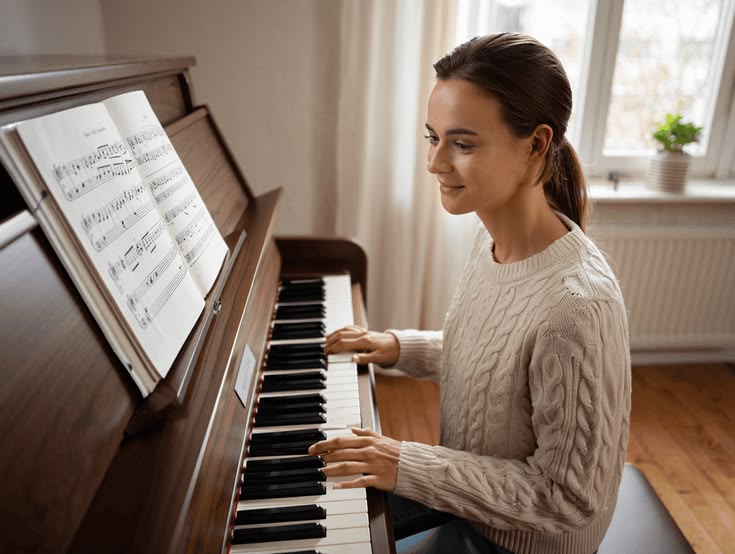
A digital piano opens up possibilities that an acoustic doesn't - different sounds, headphones for private practice, the ability to play at 11pm without waking the household.
For adult students in particular, the headphones piece matters enormously. Many adults feel self-conscious about being heard while they're learning. Knowing they can practice privately removes a significant barrier to getting started.
Why Group Piano Works Brilliantly for Adults
This is the part that genuinely excited us.
Pamela is a passionate advocate for adult group piano - and the reasons she gives are ones that align completely with everything Piano Teaching Success is built on.
When adults learn together, they stop feeling like the only person struggling. They support each other through the hard moments and celebrate each other's breakthroughs.
For an adult student on their own, that journey can feel very lonely. There can be a feeling of - I must be the only one learning piano at my age.
Group piano dissolves that isolation. It builds community. It gives adults not just a teacher but a tribe.
One of our Accredited teachers in the US put her adult group piano classes in the local bank newsletter. She now has two full classes of adults.
And what did those adults ask for when they arrived?
They wanted to do the movement activities. The whole body learning. Everything the children do!
Because they knew - somehow, instinctively - that it would help them learn.
Pamela's oldest student was 105 years old.
At 105, she was still learning piano. Still playing cello. Still hosting a group of friends in her home to play string trios together. Still curious, joyous, and learning.
"I learned so much about life from her. What she had seen in her lifetime. And to hear her talk about what piano lessons were like when she was young."
If you ever need a reminder of why this work matters - why teaching piano is not just about scales and repertoire but about quality of life, connection, and joy for as long as we are alive - teach a centenarian!
What This Means for Your Studio
Adult students are curious, motivated, emotionally invested, and ready to work.
They want to be part of making music. They want community. They want a teacher who takes their goals seriously and helps them get there.
And there are a lot of them.
If you have been building your studio exclusively around children, this episode is an invitation to look at the other 77% and work out how to invite them into your world.
Listen on your favourite platform
🎧 Listen to Episode 15 - Why Adult Piano Students Are Your Greatest Untapped Opportunity
Spotify | Apple | YouTube Video | YouTube Audio | iHeart | Amazon | Goodpods | Pocket Casts
About Dr. Pamela Pike
Dr. Pamela Pike is a researcher, educator, and editor-in-chief of Piano Magazine. She is co-editor of the Journal of Piano Research and one of the world's leading voices in adult piano pedagogy.
🔗 Journal of Piano Research - free to read at journalofpianoResearch.org
🎁 Free Download
The Real Secret to Keeping Piano Students Engaged
👉 Download free here → https://www.pianoteachingsuccess.com/lm-keeping-students-engaged-guide