#2: What Neuroscientists Discovered About Learning (And What That Means For Teaching Piano)
🎧 Listen Now: What's Really Happening in Your Students' Brains Right Now Spotify
Spotify | Apple | YouTube Video | YouTube Audio | iHeart | Amazon | Goodpods | Pocket Casts
BLOG: How many times do you see this?
A student is sitting at the piano.
You’re explaining a really cool concept or something new.
Eyes glaze over.
(And you feel like you’re talking to the wall!)
They’re technically “going through the motions”… but their brain has quietly checked out.
Maybe you’ve experienced this too.
What’s fascinating is that neuroscience now explains exactly why this happens — and, more importantly, what we can do instead to actually avoid it.
When Neuroscience Meets the Piano Lesson
In 2020, French cognitive neuroscientist Dr Stanislas Dehaene published research outlining the four conditions the human brain needs in order to learn effectively.
This framework — often called Dehaene’s Four Pillars of Learning — has been widely adopted in education and cognitive science.
When we first encountered it, we had a strong reaction: ‘Hey, This is exactly what we’ve been doing… intuitively.’
It confirmed why Whole Body Learning works so reliably, especially with today’s children.
Let’s look at these four pillars through a piano teacher’s lens.
- Attention: Learning Starts When the Brain Wakes Up
The brain doesn’t learn when it’s bored.
It learns when it’s alert, curious, and slightly challenged.
Neuroscience shows that movement and novelty are two of the fastest ways to activate attention — particularly in children.
This is why long explanations, static sitting, and “just play it again” often fail.
In Whole Body Learning, lessons are built from micro-activities:
- brief movement
- quick listening challenges
- copying patterns
- prediction games
Attention isn’t something we hope will happen — it’s something we design.
- Active Engagement: Learning is a Multi-sensory experience
Learning something through one modality or one sense doesn’t build strong neural connections.
Piano students don’t really learn to do something by listening politely to a thousand instructions or picking out and playing one note at a time.
They learn when they experience or embody concepts through:
- singing
- moving
- copying
- Watching
- Identifying Patterns
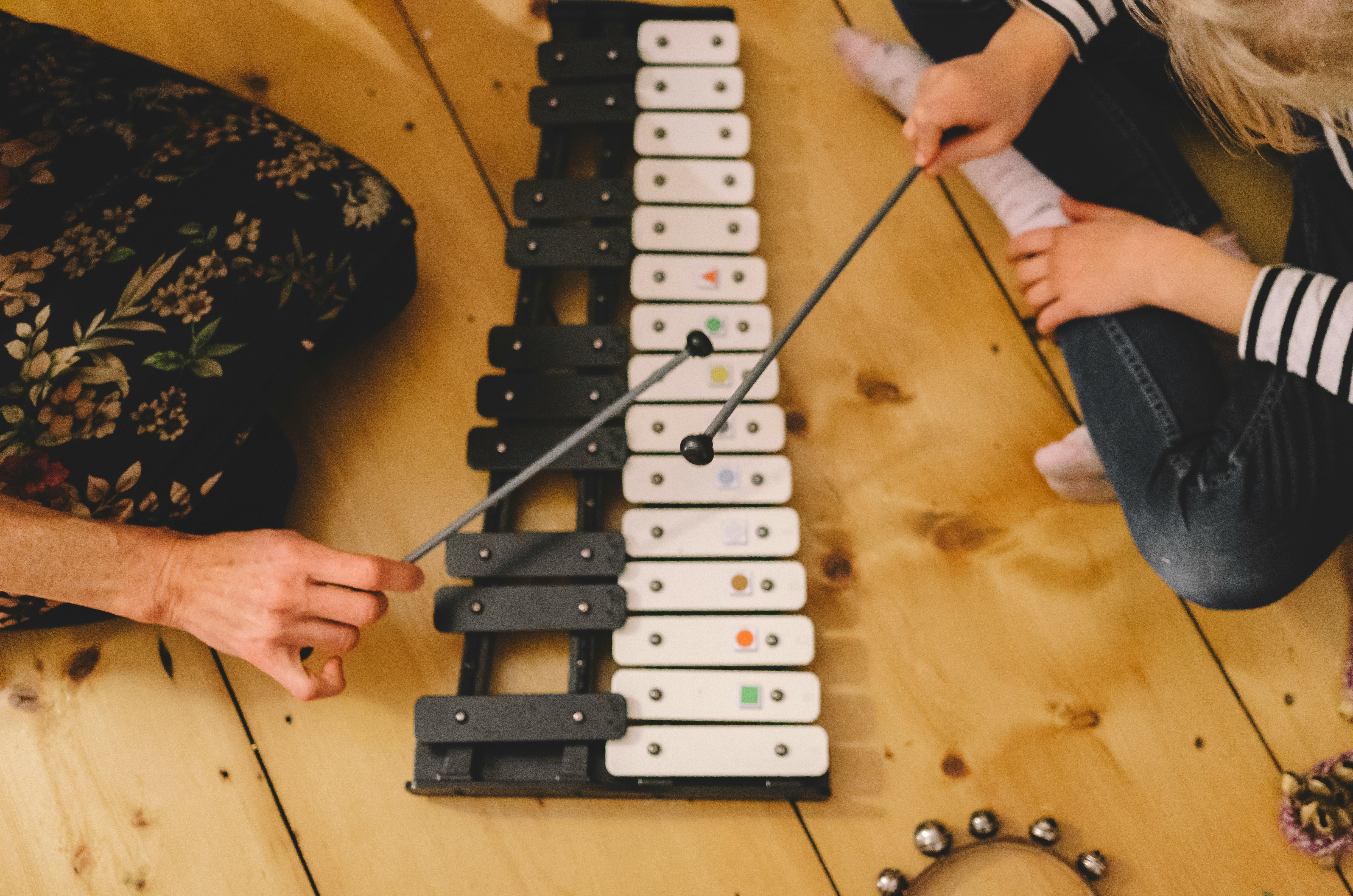
There’s a noticeable shift when this happens. Students stop following instructions… and start predicting and engaging in learning.
That’s when the lightbulb goes on.
- Error Detection & Feedback: Why Practice Often Goes Wrong
Here’s a familiar scenario:
A student plays something “almost right” in the lesson.
They go home.
They practise… incorrectly.
They return a week later with very confident mistakes.
Neuroscience explains why this is so hard to fix: the brain has already learned and reinforced the wrong pathways.
Whole Body Learning reduces this problem by:
- teaching in small, manageable chunks
- checking understanding immediately
- Sending students home having mastered one or more small chunks
The aim is for students to have a clear picture in their mind and ears of how things should sound leaving the lesson feeling confident and competent, having already mastered the material you want them to practice for next lesson.
That means
- less reprogramming next week
- less frustration (at home)
- less practice time needed (which matters in very busy households)
Technology helps here too — from using quick phone videos you’ve made during the lesson to fully orchestrated backing tracks, to provide constant rhythmic, melodic and harmonic feedback.
When students play with music, they hear when something doesn’t align — and adjust automatically.
- Consolidation: Repetition Without Switching Off
Repetition is essential for learning.
But repetition without variety quickly kills attention.
Instead of “again, again, again”, neuroscience points us toward clever repetition:
- repeating the same concept
- in different sensory modes
That might include:
- movement
- Singing
- playing
- changing body actions
- using colour or visual patterning
- adding ensemble or backing tracks
Same learning goal.
Multiple neural pathways.
This is how memory becomes durable.
Learning Works Best in a Spiral, Not a Straight Line
Dehaene’s model isn’t linear.
It loops.
Attention leads to engagement.
Engagement reveals errors.
Feedback strengthens understanding.
Clever repetition holds attention… and the cycle continues.
When attention drops, learning collapses. When it’s sustained, learning spirals upward.
This is exactly what we see in Whole Body Learning lessons.
A Simple Musical Example: “Cha Cha Cha”
Take a piece like Cha Cha Cha.
When taught through a Whole Body Learning lens:
- Attention comes from the upbeat music and movement
- Engagement comes from copying actions or body percussion
- Error detection happens naturally when students don’t synchronise
- Consolidation occurs through playful repetition — each time in a slightly different way
The music itself becomes the teacher.
Ready to Try This with Your Students?
If you’d like to experiment with this approach, start with Cha Cha Cha.
PTS/Studio Members: Grab it inside your account
New here: Download the handout for free
Intrigued to learn more?
Ready to watch or listen to learn more? Listen to Episode 2 on the Piano Teaching Success Podcast now. This is a quick but impactful episode you’ll love!
Listen/Watch on:
Spotify | Apple | YouTube Video | YouTube Audio | iHeart | Amazon | Goodpods | Pocket Casts
Want more done-for-you Whole Body Learning resources?
- A huge library of lesson-ready resources
- Practical Whole Body Learning tips, ideas, and inspiration
- The latest updates in piano teaching
- Monthly masterclasses (live + replay)
- Monthly handouts
- Ask us anything and get access to over 60 years of our piano teaching and coaching expertise
- And a beautiful, nurturing community of supportive teachers around the world